East China’s Jiangsu province has made remarkable progress in its overseas development by tapping into the country’s Belt and Road initiative, as is evidenced by the achievements made by Jiangsu’s investment in Bangladesh.
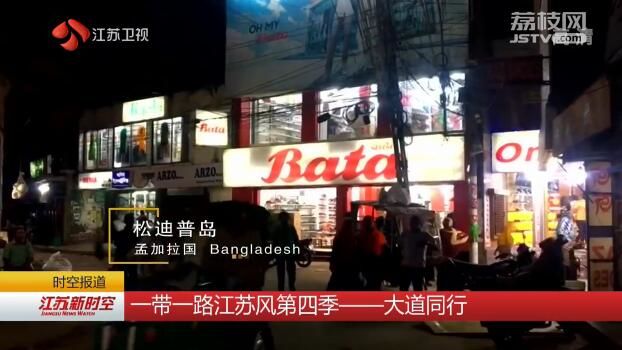
Bangladesh, which is located in South Asia, has a larger land area than Jiangsu Province and has a population of 170 million, making it in urgent demand for infrastructures such as electricity and transportation. In recent years, China-Bangladesh cooperation has flourished by taking advantage of the Belt and Road initiative, as is evidenced by the launch of a series of major investment projects to open up a new channel for Bangladesh to reach out to the vast blue ocean.
As night fell, lamps were lit up on Songdip Island in Chittagong, Bangladesh. Many families were sitting around the table watching TV. This warm scene seems normal, but it was not made possible until two years ago.
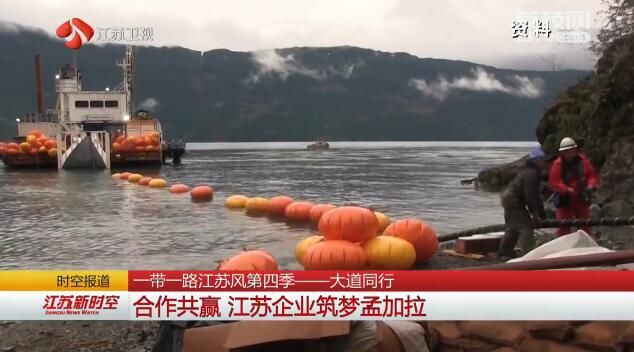
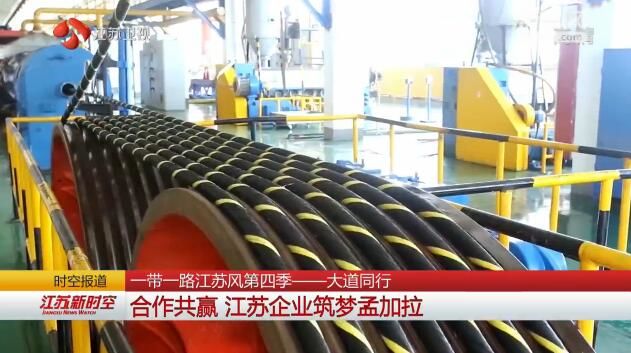
In 2017, electricity was not accessible on the island and the islanders could only rely on solar panels to obtain very weak power supply. However, a submarine cable has changed their lives. The contractor of this project is Jiangsu Zenith Technology. With leading technology and product standards to overcome the harsh natural conditions, Zenith Technology delivered the project in March last year, meeting the demand for electricity by 400,000 people on the island.

a resident of Songdip Island,Bangladesh 孟加拉国松迪普岛居民
Life with electricity is totally different, making it very convenient for us to spend the night. Our island will get better and better. Thank you for your help.
Songdip Island is not alone. Power shortage is widespread and rampant in Bangladesh. With the help of Chinese companies, this phenomenon is gradually improving.
In addition to the electricity infrastructure, China's technology and experience have also played a huge role in the energy and minerals needed for power generation.
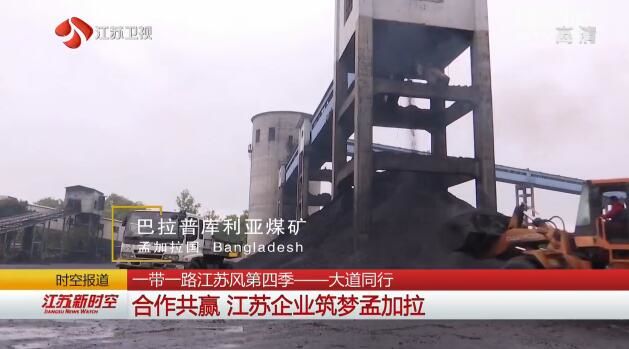
The Barapukuria Coal Mine, located in the northwest of Bangladesh, is the only modern coal mine in the country. Xuzhou Coal Mining Group provides production, management and operation services for the mine, helping Bangladesh overcome the complex hydrological conditions and extremely difficult mining problems and cultivating the first generation of miners in Bangladesh.
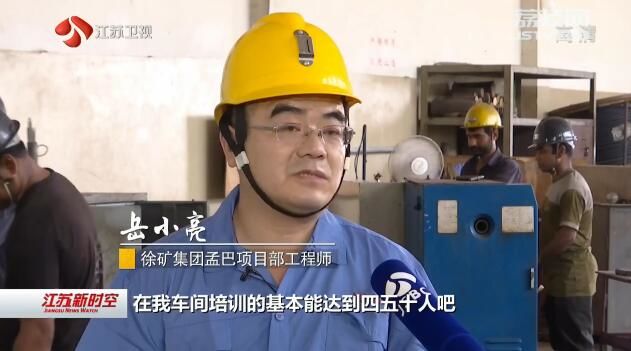
Yue Xiaoliang, Chinese engineer of the Barapukuria Coal Mine:
About 40 or 50 locals are trained in my workshop and it takes about half a year to train one person.
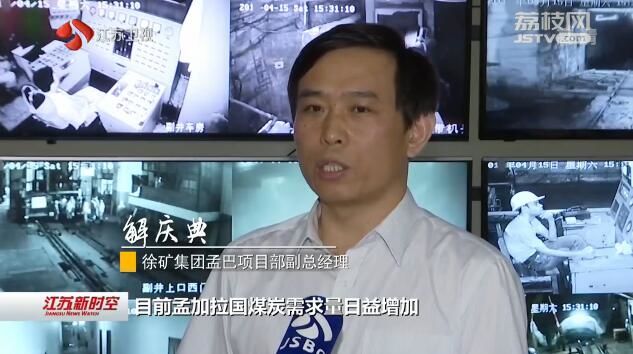
Xie Qingdian, deputy general manager of the Barapukuria Coal Mine:
At present, the demand for coal in Bangladesh is increasing, and we will actively cooperate with Bangladesh to develop new projects.
Today, the Barapukuria Coal Mine has produced more than 10 million tons of coal, and employing more than 5,000 Bangladeshis. More than 10,000 surrounding villagers, artisans and merchants have benefited from coal mine development, improving their living standards significantly. Under the guidance of the technicians from Xuzhou Coal Mining Group, many local miners have learned simple Chinese vocabulary and remembered a place name in China.
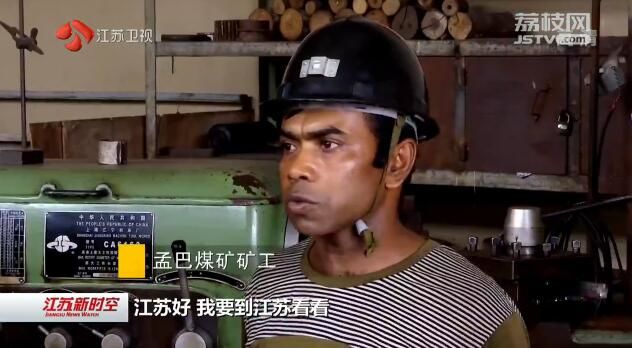
A Bangladesh coal miner:
Jiangsu is very fantastic. I am looking forward to visiting Jiangsu.
Traffic jams in Dhaka, the capital, is a big problem. Close to Dhaka’s Padma River, a natural barrier between the cities, a large number of vehicles and boats waiting to be ferried, further exacerbating congestion

A Bangladesh vendor:
It takes about 20 hours for each boat ride. When the bridge is built, it takes only 5 hours to get there by car.
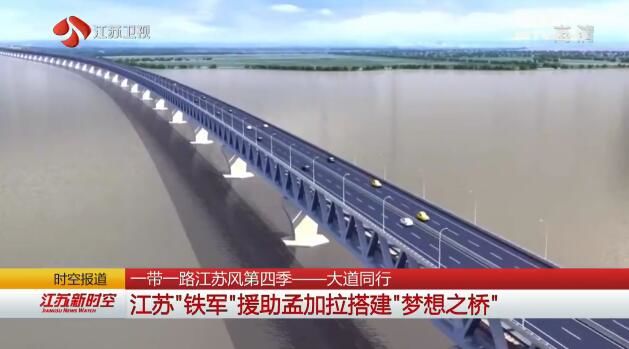
What the vendors are looking forward to is the Padma Bridge, the "bridge of dream" as is called by the Bangladeshis, which is being built by the Chinese. In order to cope with the complicated and varied riverbed and climatic conditions, the Fourth Engineering Company of Jiangsu Railway Bridge adopted a number of original technologies in the fields of steel pile construction and steel beam erection.
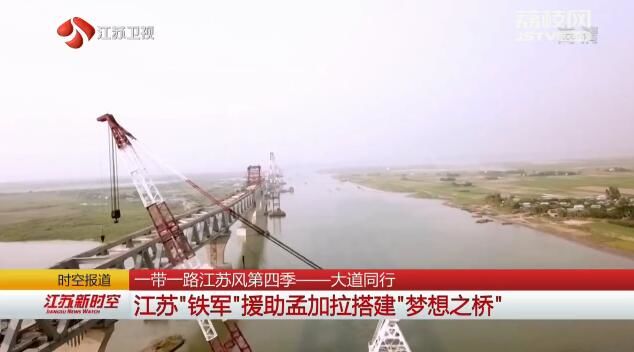
At present, 66% of the bridge construction has been finished. Upon its operation, Dhaka will be connected to 21 cities in the south by roads and railways, which will boost the growth of Bangladesh's economy by 1.2%.
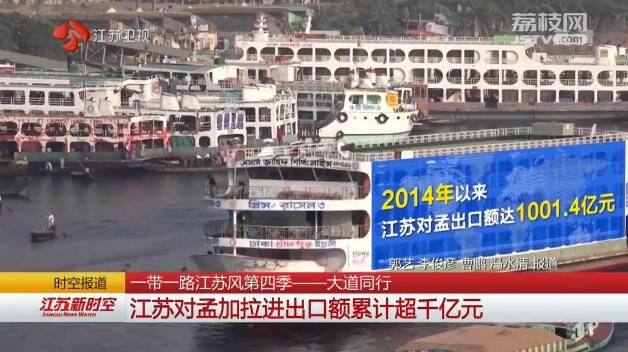
With the help of the Belt and Road Initiative, China has become Bangladesh’s largest trading partner in recent years. Take Jiangsu as an example. Since 2014, its import and export volume with Bangladesh has been increasing year by year, totaling more than 100 billion yuan. Jiangsu has invested in 28 projects in Bangladesh with an investment of more than US$100 million. More and more Jiangsu enterprises have begun to make inroads into the most economically promising country in South Asia, and sailed to a vast ocean of mutual benefit and win-win together with the people of Bangladesh.
(source:ourjiangsu.com)