The eight cities along the Yangtze River in Jiangsu have spared no efforts to implement the spirit of the Yangtze River Economic Belt Development Promotion Conference, seize the new growth point of the hub economy, improve the construction of transportation hub facilities and accelerate the development of industrial chain and aggregation.
Nanjing Xiba Port is located on the north bank of the 12.5-meter deep-water channel of the Yangtze River. The special railway line connecting the port area with the Nantong-Qidong Railway can ensure that the goods are loaded onto the trains once they are transported here. The integration of railway and water transportation features large transport capacity, low cost and low pollution.
According to Nanjing's latest urban planning, the Xiba Port will be part of the deep-water railway and highway transport system in collaboration with the Longtan Port on the southern bank of the Yangtze River. However, due to the low design standards and the inability to meet the operational requirements of the National Railway’s standard freight trains, this railway line, which used to be dominated by coal transportation, has an annual transportation capacity of only 4 million tons.
In the province's coordinated development, Jiangsu is focusing on upgrading Nanjing's role of being the leading city in the province, by building a crisscrossed transportation network with Nanjing as the center and speeding up the creation of a metropolitan area of 1.5 hours train commute that reaches out to various places across the province.
Jiangsu is also accelerating the construction of regional comprehensive transportation hubs such as Xuzhou, Lianyungang, and Wuxi, as well as such as Suzhou, Nantong and Huai'an.
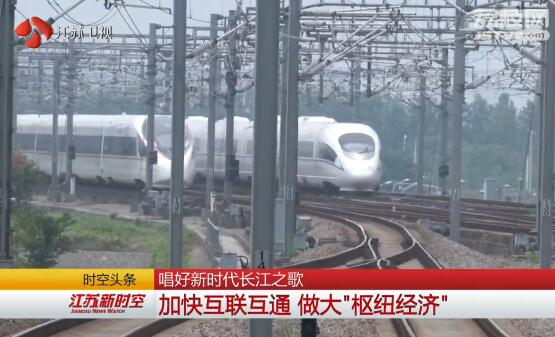
In the meantime, the province is accelerating the construction of high-speed railway networks in North Jiangsu and Central Jiangsu, and inter-city rail networks in southern Jiangsu. By 2020, the mileage of high-speed railways will cover more than 70% of county-level and above regions. It will also ease the traffic bottleneck across the Yangtze River with 17 river-crossing channels to be constructed in 2 years and 30 in 2025.
In other development plans, Jiangsu will step up the efforts for the construction of the river-sea integrated transport channels, promote the construction of regional logistics hubs in Nanjing and build a world-class airport cluster in the Yangtze River Delta by focusing focus on improving the international transportation capacity of Nanjing Lukou Airport and Wuxi Shuofang Airport.