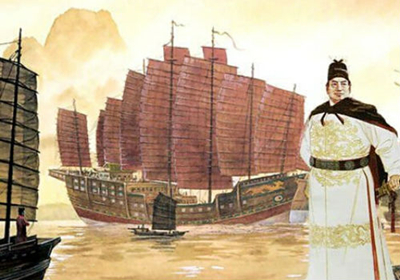
Zheng He (1371-1435), the great navigator and explorer who led seven voyages to the Indian Ocean from 1405 to 1433 during the Ming Dynasty (1368-1644). [Photo/sina.com]
Zheng He (1371-1435) was a great Chinese historical navigator and explorer.
He led seven voyages to the Indian Ocean from 1405 to 1433 during the Ming Dynasty (1368-1644), and also left many unexplained mysteries behind, such as how did he plan his travel and what kind of regional oceanic conditions did he encounter.
Dong Changming, a professor at the School of Marine Sciences of Nanjing University of Information Science and Technology, has long admired Zheng’s brave voyages. He devoted all his energy to studying Zheng and discovered some unknown facts by seeing things from an oceanographic perspective.
In his recent monograph Oceanography in the Voyages of Zheng He to the Western Ocean, he explains how he and his team went back to the historical information, simulated it using numerous climatic statistics, and finally shed new light on Zheng’s sixth voyage to the West.
The team’s work identified various influential factors, such as regional maritime features, ocean temperatures, salinity, tides, oceanic general circulation, and climatic systems, and also took into account the influence of the so-called Little Ice Age, a period of cooling that occurred during China’s late Ming and early Qing dynasties.
“Though arguments about the starting time of the Little Ice Age still remain, we believe in its influence on Zheng’s voyages as there has been research preferring an alternative timespan from about 1300 to about 1850 and considering that China had already entered the cooling season,” the professor said.
In answering how Zheng was able to take advantage of natural conditions and drive his fleet forward – a question of greatest concern – the professor spoke highly of Zheng’s ability to tackle monsoons and gave several examples.
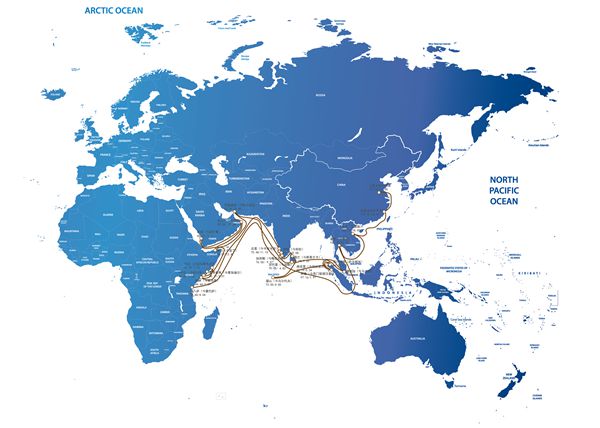
The routes of Zheng He’s seven voyages to the West. [Photo/sina.com]
“It took Zheng about one and a half years for a round-trip, almost the same as the switching time among different monsoons,” Dong said.
According to Dong, Zheng’s sixth voyage, which started in Taicang, Jiangsu province in March 1421, may have taken advantage of the northeast monsoon and realized a wind speed of five meters per second.
Moreover, Dong believes that waves and current power also contributed to that sixth voyage.
“Zheng’s sixth trip set off in spring. It was a time when the Yangtze River’s diluted water was moving southeast and the surface current along the Jiangsu waterfronts was turning from north to east, hence making it easy for Zheng’s fleet to sail from north to south,” Dong explained.
Though winning a warm response from academic circles, Dong regards his devotion as “a sense of mission”.
“When I was teaching marine science in the US, the textbooks didn’t include any information about Zheng’s seven voyages. That drove me to write a book describing Zheng’s brave and historic stories in detail,” the professor said.